

Height and weight are two basic body measurements that help healthcare professionals understand growth, monitor weight changes, and assess certain aspects of health. They are also used to calculate Body Mass Index (BMI) and Body Surface Area (BSA), which serve different purposes in healthcare.
Understanding your height and weight can help you track changes over time, prepare for routine health checkups, and make informed lifestyle choices. However, these measurements cannot tell you everything about your health. Age, body composition, medical history, physical activity, and other health indicators also matter.
In this guide, Medinzo explains why height and weight are important, how to measure them accurately, the difference between BMI and BSA, and practical tips for maintaining healthy habits.

Why Are Height and Weight Important for Health?
Height and weight provide useful information about a person’s body size and changes over time. Healthcare professionals may use these measurements to assess growth, screen for weight-related health concerns, and support clinical calculations.
The main benefits of measuring height and weight include:
- Monitoring growth: Height and weight help track growth patterns in children and adolescents.
- Understanding weight status: These measurements are used to calculate BMI, a screening tool for weight relative to height.
- Supporting medical assessments: Height and weight can be used to estimate BSA for selected clinical purposes.
- Tracking weight changes: Repeated measurements can help identify unexpected changes that may need medical evaluation.
- Supporting personalized care: Healthcare professionals interpret these measurements alongside medical history and other relevant findings.
Key takeaway: Height and weight are useful health indicators, but neither measurement alone can determine whether someone is healthy.
How to Measure Your Weight Correctly
Accurate weight measurement helps you monitor changes more consistently. Follow these practical tips:
- Use a reliable digital weighing scale on a firm, level surface.
- Remove your shoes and wear similar lightweight clothing when possible.
- Measure at a consistent time of day, preferably under similar conditions.
- Record your weight if you are monitoring changes over time.
- Avoid interpreting small daily fluctuations as meaningful changes in body fat or overall health.
Body weight can fluctuate because of hydration, food intake, bowel movements, and other normal factors. If you experience unexplained or persistent weight loss or gain, consult a healthcare professional.
How to Measure Your Height Accurately
Correct height measurement matters because height is used in BMI and BSA calculations.
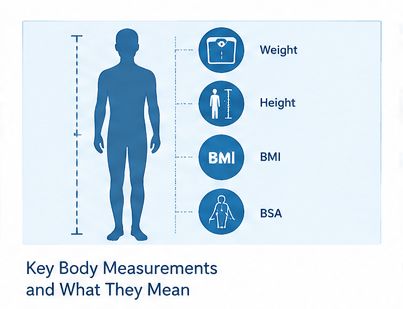
To measure your height accurately:
- Stand upright on a flat surface without shoes.
- Keep your heels on the floor and look straight ahead.
- Use a suitable height-measuring device or a wall-mounted stadiometer.
- Maintain a natural posture without stretching or standing on your toes.
- Record your height in centimeters or meters, depending on the calculator requirements.
For children, height should be assessed in relation to age and growth patterns rather than adult standards.
What Is the Difference Between BMI, BSA, and Calorie Needs?
Height and weight are used in different health calculations, but each calculation serves a specific purpose. Body Mass Index (BMI), Body Surface Area (BSA), and daily calorie needs should not be confused with one another.
What Is Body Mass Index (BMI)?
Body Mass Index (BMI) is a screening measurement that compares weight with height squared.According to the CDC, BMI is a screening measure and should be considered alongside other health factors. It is commonly used to assess weight status in adults.
BMI formula:
BMI = Weight (kg) ÷ Height (m)²
BMI does not directly measure body fat and should be interpreted alongside other health information.
If you want to calculate your BMI, use the Medinzo BMI Calculator. Enter your height and weight to estimate your BMI and understand what the result may indicate.
What Is Body Surface Area (BSA)?
Body Surface Area estimates the external surface area of the body and is expressed in square meters (m²). Healthcare professionals may use BSA in selected clinical assessments and certain medication dosing protocols.
You can estimate your body surface area using the Medinzo Body Surface Area Calculator.
Remember that BSA is not a substitute for BMI, and its result should not be used independently to determine a medicine dose.
How Many Calories Do You Need Each Day?
Daily calorie needs refer to the amount of energy your body requires from food and drinks. Your needs depend on several factors, including age, height, weight, sex, physical activity, and personal health goals.
If you want to estimate your daily energy needs, try the Medinzo Calorie Calculator. Its estimate can help you understand your calorie requirements, but individual needs may vary.
Important: BMI estimates weight relative to height, BSA estimates body surface area, and a calorie calculator estimates energy needs. These tools answer different questions and should be used according to their intended purpose.
What Factors Affect Body Weight?
Body weight is influenced by several interconnected factors. Understanding them can help you make realistic and sustainable health choices.
Diet and Nutrition
Eating habits, portion sizes, and overall energy intake can influence weight over time. A balanced diet may include vegetables, fruits, whole grains, suitable protein sources, and other nutrient-rich foods.
Body weight can be affected by diet, physical activity, sleep, age, stress and other individual factors.
Physical Activity
Regular movement supports cardiovascular health, muscle strength, and general well-being. The appropriate activity level depends on age, fitness, and medical circumstances.
Sleep and Daily Routine
Sleep patterns, stress, and daily routines may influence appetite, energy levels, and lifestyle habits.
Age and Body Composition
Body composition changes throughout life. Muscle mass, fat distribution, and growth patterns affect how height and weight should be interpreted.
Medical Conditions and Medicines
Some medical conditions and medicines can affect appetite, metabolism, or fluid balance. Unexpected weight changes should not automatically be attributed to diet or physical activity.
Practical Tips for Maintaining a Healthy Weight
Maintaining a healthy weight involves sustainable eating habits, physical activity, adequate sleep, and an understanding of your individual nutritional needs.

- Eat a balanced diet: Include vegetables, fruits, whole grains, protein sources, and other nutritious foods.
- Understand your calorie needs: Your daily energy requirements depend on your body measurements, activity level, age, and other personal factors. The Medinzo Calorie Calculator can help you estimate your daily calorie needs.
- Stay physically active: Choose regular activities that suit your fitness level and health circumstances.
- Maintain a consistent sleep routine: Adequate sleep supports general health and healthy daily habits.
- Monitor your weight sensibly: Use consistent measurement conditions and avoid worrying about small daily fluctuations.
- Seek personalized advice: A healthcare professional or registered dietitian can help you understand your nutritional needs and set realistic goals.
There is no single calorie target or ideal body weight that suits everyone. Calculator results are estimates and should be adapted to individual circumstances.
When Should You Seek Medical Advice About Weight Changes?
Consider speaking with a healthcare professional if you experience unexplained weight loss, persistent weight gain, concerns about a child’s growth, or sudden weight changes accompanied by swelling or other symptoms.
A clinician may consider your medical history, medications, diet, physical activity, examination findings, and other tests when needed.
Do not rely on height and weight alone to diagnose an underlying health condition.
Frequently Asked Questions
Why are height and weight important for health?
Height and weight help monitor growth, track changes in body size, calculate BMI and BSA when appropriate, and support certain clinical assessments. They must be interpreted alongside other health information.
How often should I measure my height and weight?
Adults may measure weight periodically when it is relevant to their health goals. Height generally does not need frequent measurement in adults. Children and adolescents may need regular growth monitoring according to healthcare guidance.
Can height and weight determine whether I am healthy?
No. These measurements provide limited information about health. Blood pressure, medical history, physical activity, body composition, and other indicators may also be important.
What is a healthy BMI?
For adults, BMI categories are commonly used as screening ranges, but BMI is not a direct measurement of body fat or a complete health assessment. Interpretation differs for children, teenagers, pregnancy, and certain clinical situations.
How can I calculate my Body Surface Area?
You can use the Medinzo BSA Calculator by entering your height and weight in the units requested by the calculator. The result is an estimate and should be interpreted according to its intended purpose.
Is BSA used for medication dosing?
Yes, some medicines use BSA-based dosing protocols. However, the appropriate dose depends on the specific medicine, clinical protocol, and patient factors. Never calculate or change a medication dose based on BSA alone.
What should I do if my weight changes unexpectedly?
Consider recent changes in diet, activity, hydration, and medicines, but do not assume these explain every change. Seek medical advice if the change is unexplained, persistent, or accompanied by concerning symptoms.
Final Thoughts
Height and weight are simple but useful measurements that support growth monitoring, weight assessment, and selected medical calculations. Measuring them correctly and understanding their limitations can help you make more informed decisions about your health.
For a broader understanding of body measurements, explore the Medinzo Body Surface Area Calculator. Use the result for informational purposes and consult a qualified healthcare professional when it relates to diagnosis or treatment.
Medical disclaimer: This article is intended for general educational purposes only. It does not replace professional medical advice, diagnosis, or treatment.