
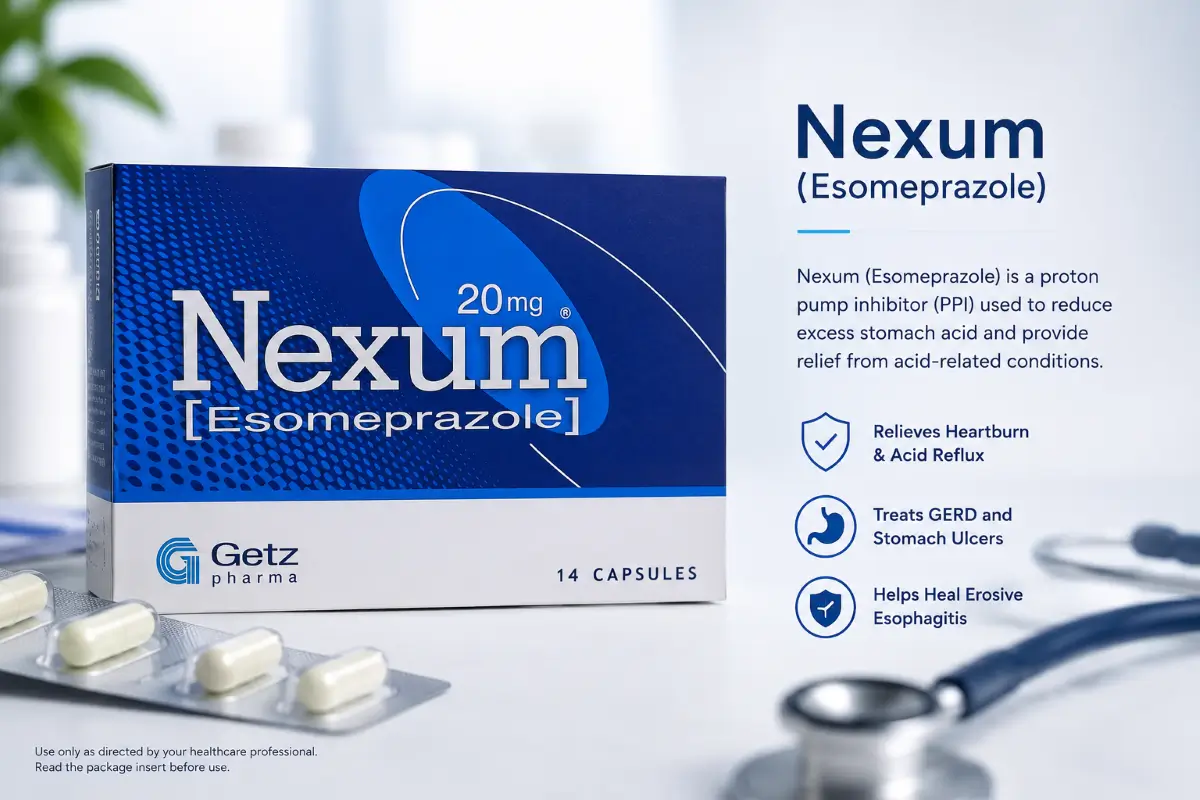
Quick Answer: Nexum tablet contains esomeprazole, a proton pump inhibitor (PPI) that reduces stomach acid. Nexum tablet uses include treating acid reflux, GERD, heartburn, and stomach ulcers by lowering excess acid in the stomach.
Heartburn that keeps coming back is annoying, but it’s also one of the most common reasons doctors reach for a PPI like Nexum. This guide breaks down the Nexum tablet uses, how it’s taken, what it costs, and what side effects to actually watch for — using real clinical sources instead of guesswork.
What Is Nexum Tablet?
Nexum is a brand of esomeprazole magnesium trihydrate, manufactured by Getz Pharma. The company lists Nexum capsules in 20 mg and 40 mg strengths. It belongs to a group of medicines called proton pump inhibitors (PPIs).
In simple terms, Nexum works by reducing the amount of acid produced by the stomach.
That makes it different from an ordinary antacid that simply neutralizes acid already present in the stomach. Esomeprazole works at the acid-producing proton pumps in the stomach lining.
Less acid means less irritation, less burning, and more time for already-damaged tissue in the esophagus or stomach to actually heal — which is the whole point of taking it in the first place.
What Causes Acid Reflux and GERD in the First Place?
Acid reflux happens when the lower esophageal sphincter — the ring of muscle that’s supposed to keep stomach acid where it belongs — relaxes or weakens at the wrong time. Acid then washes back up into the esophagus, which isn’t built to handle it the way the stomach lining is, and that’s what causes the burning sensation people call heartburn.
A few things make this more likely: eating large or fatty meals, lying down soon after eating, being overweight, smoking, pregnancy, and certain foods like caffeine, chocolate, citrus, and spicy dishes. When reflux happens often enough to disrupt daily life, it’s usually called GERD rather than just occasional heartburn — and that’s typically when a doctor considers a PPI like Nexum instead of just an antacid.
Nexum Tablet Uses
The main Nexum tablet uses are related to conditions caused or worsened by excessive stomach acid.
1. Acid Reflux (Acidity)
One of the common Nexum tablet uses is managing acid reflux, especially when stomach acid repeatedly moves upward into the esophagus.
This can cause:
- Burning in the chest
- Sour or bitter taste
- Acid coming back into the mouth
- Upper abdominal discomfort
- Heartburn after meals
Esomeprazole reduces stomach acid, which can help relieve symptoms and allow acid-related irritation of the esophagus to heal.
2. GERD
GERD (gastroesophageal reflux disease) is one of the major conditions for which esomeprazole is used.
GERD occurs when stomach contents repeatedly flow back into the esophagus. Long-term reflux can irritate and damage the esophageal lining.
Nexum may therefore be prescribed for symptomatic GERD and for healing certain acid-related esophageal damage. Nexum tablet uses for GERD may include symptom relief and maintenance of healing in appropriate patients. Getz Pharma specifically lists GERD, including healing and maintenance of erosive esophagitis, among Nexum indications.
3. Heartburn
Another common Nexum tablet use is helping with frequent heartburn associated with excess stomach acid.
However, it is important to understand that esomeprazole is not designed for instant relief in the same way some simple antacids may be.
NHS guidance notes that esomeprazole can begin helping within a few days and may take longer to reach its full effect.
4. Erosive Esophagitis
Repeated exposure to stomach acid can damage the lining of the esophagus.
This condition is known as erosive esophagitis.
Esomeprazole may be prescribed to help heal this damage and, in appropriate patients, maintain healing.
5. Stomach Ulcers
Esomeprazole is also used in the treatment or prevention of certain stomach ulcers.
One important situation involves people taking NSAID painkillers, such as some forms of ibuprofen, aspirin or other anti-inflammatory medicines.
These medicines can increase the risk of stomach ulcers in some patients. Esomeprazole may be prescribed to reduce that risk in appropriate cases.
6. H. pylori Treatment
Some stomach and duodenal ulcers are associated with Helicobacter pylori (H. pylori) infection.
Nexum itself does not act as an antibiotic.
Instead, esomeprazole can be included as part of a combination treatment with appropriate antibiotics to help eradicate H. pylori and reduce the risk of ulcer recurrence.
7. Zollinger-Ellison Syndrome
Zollinger-Ellison syndrome is a rare condition in which the body produces excessive amounts of stomach acid.
Esomeprazole can be used in certain patients with this condition to reduce acid production.
Nexum Strengths and Other Brand Names of Esomeprazole in Pakistan
Nexum is commonly available in 20mg and 40mg capsules. Since esomeprazole is a widely used generic medicine, it’s sold in Pakistan under several brand names besides Nexum, including Esso, Esomax, Esomega,Eskem,Ezomol, Ezium and Esoral. All of these contain the same active ingredient and work the same way — the real difference usually comes down to manufacturer and price, not effectiveness.
Nexum 20 mg Tablet Uses
Nexum 20 mg contains esomeprazole and may be prescribed for acid-related conditions such as GERD, heartburn and other conditions requiring acid suppression.
The exact dose depends on the diagnosis.
For example, treatment for uncomplicated reflux may require a different regimen from treatment for erosive esophagitis, ulcer disease or excessive acid production.
Therefore, Nexum 20 mg Tablet Uses should not be interpreted as a universal dosing recommendation.
Nexum 40 mg Tablet Uses
Nexum 40 mg is a higher-strength capsule containing esomeprazole.
It may be prescribed when a stronger level of acid suppression is required for a particular condition, such as certain cases of erosive esophagitis or other acid-related disorders.
The Nexum 40 mg uses depend on the clinical indication, so patients should not increase from 20 mg to 40 mg on their own.
Getz Pharma lists Nexum in both 20 mg and 40 mg capsule strengths.
Nexum (Esomeprazole) During Pregnancy and Breastfeeding
The use of esomeprazole during pregnancy should be discussed with a healthcare professional before starting, stopping, or changing treatment. If you are pregnant, planning to become pregnant, or breastfeeding, inform your doctor so they can assess whether esomeprazole is appropriate for you.
If you are searching for Nexum tablet uses, Nexum contains esomeprazole, a proton pump inhibitor (PPI) commonly used to reduce excess stomach acid and manage conditions such as acid reflux, heartburn, and certain stomach or esophageal problems. However, the decision to use Nexum during pregnancy should be based on the potential benefits and risks for the individual patient.
Do not self-medicate with Nexum or change the dose without medical advice, particularly during pregnancy or breastfeeding. Your healthcare professional may recommend an alternative treatment depending on your symptoms, medical history, and stage of pregnancy.
How to Take Nexum (Dosage Guidelines)
Nexum capsules should be swallowed whole with a glass of water, at the same time every day, generally on an empty stomach and at least one hour before a meal. Do not cut, crush, or chew the capsule — doing so can interfere with how the medicine is absorbed.
If swallowing the capsule whole is difficult, it can be opened and the contents mixed into a spoonful of applesauce, then swallowed right away without chewing.
The exact dose and how long you need to take it depend on the condition being treated. A typical course for healing esophagitis, for example, commonly runs four to eight weeks. Always follow the dose a doctor prescribes rather than a general online guideline, since the right dose can vary with age, kidney or liver function, and the specific condition.
If a dose is missed: take it as soon as it’s remembered. If it’s almost time for the next dose, skip the missed one entirely — never double up to make up for it.
Nexum Price in Pakistan
Nexum’s price depends on the strength (20mg or 40mg), pack size, and the pharmacy or city you’re buying from, and prices do get revised from time to time. Rather than quoting a fixed number that could be outdated by the time you read this, it’s best to check the current price with a local pharmacy or your preferred pharmacy’s official listing before buying.
Side Effects of Nexum
Like all medicines, Nexum can cause side effects. Most people tolerate it well, but it helps to know what’s normal and what isn’t.
Common, usually mild side effects:
- Headache
- Nausea
- Diarrhea
- Gas
- Dry mouth
Side effects that need prompt medical attention:
- Signs of an allergic reaction — rash, itching, or swelling of the face or throat
- Severe or watery diarrhea lasting more than two days, especially with fever
- Muscle cramps, unusual weakness, or an irregular heartbeat (possible signs of low magnesium)
- Tingling, numbness, or confusion (possible signs of low vitamin B12)
- Unusual bleeding or bruising
- Reduced urination or swelling in the ankles, hands, or feet (possible kidney involvement)
Serious allergic reaction
According to the NHS, a serious allergic reaction (anaphylaxis) to esomeprazole is rare but requires immediate medical attention.
Taking the esomeprazole long-term may also raise the risk of bone fractures, lower vitamin B12 levels, and, in rare cases, cause small growths (polyps) in the stomach lining. That doesn’t mean everyone on long-term treatment will experience these effects — it’s exactly why doctors usually prescribe the lowest effective dose for the shortest necessary duration, with periodic blood tests for anyone on Nexum long-term.
Who Should Be Careful With Nexum?
Tell a doctor before starting Nexum if there’s a history of liver disease, low calcium, magnesium, or potassium levels, or an autoimmune condition like lupus. It’s also important to mention pregnancy, plans to become pregnant, or breastfeeding — esomeprazole isn’t automatically unsafe in pregnancy, but it should only be used when a doctor confirms it’s genuinely needed. Self-medicating with any PPI during pregnancy is best avoided.
Nexum can also interact with certain medicines, including blood thinners like warfarin, some antifungal medications, certain seizure medicines, and clopidogrel (a common blood-thinning medicine used after heart procedures). Always share a full medicine list with a doctor or pharmacist before starting Nexum.
Lifestyle Changes That Help Alongside Nexum
Medicine works better when it isn’t fighting daily habits. A few changes that genuinely help reduce acid reflux:
- Avoid known trigger foods — spicy, fried, or fatty meals, caffeine, chocolate, and carbonated drinks
- Don’t lie down for at least 2–3 hours after eating
- Eat smaller meals rather than large ones
- Elevate the head of the bed slightly if nighttime reflux is a problem
- Maintain a healthy weight, since extra abdominal pressure worsens reflux
- Cut back on smoking, which weakens the same muscle that’s supposed to keep acid down
None of these replace medicine when it’s genuinely needed, but they do reduce how much medicine is needed — and how long it’s needed for.
When Should You See a Doctor Right Away?
Most acid reflux is manageable with lifestyle changes and medicines like Nexum. But a few warning signs mean it’s time to see a doctor rather than self-treat:
- Difficulty or pain when swallowing
- Unintentional weight loss
- Vomiting blood, or stools that look black and tarry
- Chest pain that could be confused with a heart problem
- Symptoms that don’t improve after two weeks of consistent treatment
These signs don’t always mean something serious, but they’re exactly the kind of thing that needs a proper examination instead of a guess.
Related Medicines for Acid Reflux
Nexum belongs to a wider family of acid-reducing medicines. Depending on the condition, doctors sometimes prescribe alternatives or add-on options such as other PPIs (like omeprazole or pantoprazole), H2 blockers (like famotidine), or simple antacids for occasional, mild heartburn. We’ll cover these in dedicated articles soon.
Nexum Tablet Uses in Urdu/Hindi: Simple Explanation
Nexum tablet kis liye use hoti hai?
Nexum mein esomeprazole hota hai jo stomach acid ko kam karta hai. Nexum tablet uses mein commonly acidity, heartburn, acid reflux, GERD aur kuch stomach ulcers ka treatment shamil hai.
Kuch cases mein Nexum ko H. pylori infection ke treatment ke liye antibiotics ke sath diya jata hai. NSAID painkillers ki wajah se ulcer ka risk kam karne ke liye bhi doctor esomeprazole prescribe kar sakte hain.
Nexum 20 mg aur Nexum 40 mg dono strengths available hain, lekin 20 mg ya 40 mg mein se kaunsi strength leni hai, ye disease aur doctor ki prescription par depend karta hai.
Frequently Asked Questions
Should Nexum be taken before or after food?
Nexum works best on an empty stomach, generally at least one hour before a meal, so the medicine is already active before food triggers acid production.
Is Nexium good for stomach pain?
Not necessarily. Nexium/esomeprazole reduces stomach acid, so it may help stomach discomfort when the underlying problem is acid-related, such as GERD or an acid-related ulcer. But stomach pain has many possible causes, so persistent or severe pain should not simply be treated with acid-reducing medicine without evaluation.
Nexum tablet uses in Urdu?
نیکسم ٹیبلٹ معدے کی تیزابیت کم کرنے کے لیے استعمال ہوتی ہے۔ یہ سینے کی جلن، ایسڈ ریفلکس، معدے کے السر اور جی ای آر ڈی جیسے مسائل میں دی جاتی ہے۔
(Nexum tablet maide ki tezabiyat kam karne ke liye istemal hoti hai. Yeh seenay ki jalan, acid reflux, maide ke ulcers aur GERD jaisay masail mein di jati hai.)
What are Nexium tablets used for?
Nexium is a brand associated with esomeprazole, a proton pump inhibitor used to reduce stomach acid. It may be used for GERD, erosive esophagitis, ulcers, H. pylori-related ulcer treatment and other acid-related conditions.
Can Nexum be taken for a long time?
It can be, but only under a doctor’s supervision. Long-term use needs occasional monitoring because of the bone, magnesium, and vitamin B12 effects mentioned above.
What is the difference between Nexum and Nexium?
Nexum and Nexium are brand names associated with esomeprazole in different markets. However, patients should check the active ingredient, strength and formulation on the actual medicine pack rather than assuming that every product with a similar name is identical.
Is Nexum available without a prescription?
In some countries, low-dose esomeprazole is sold over the counter for short-term heartburn relief. In Pakistan, it’s best treated as a prescription medicine, especially for anything beyond occasional heartburn — speak to a doctor or pharmacist before starting it regularly.
How long does Nexum take to start working?
Many people feel some relief within 1–2 days, but full symptom control and healing of any esophagitis or ulcers can take several weeks of consistent daily use.
Can Nexum be taken with Panadol or other painkillers?
Occasional Panadol (paracetamol) alongside Nexum isn’t usually a concern, since the two don’t interact directly. It’s NSAIDs — like aspirin or ibuprofen — that need more caution, since they’re actually one of the reasons doctors prescribe Nexum in the first place: to protect the stomach from the acid-related side effects of long-term NSAID use.
Medical Disclaimer
This article is for general educational purposes only and does not replace professional medical advice. Do not start, stop, or change the dose of Nexum or any esomeprazole product without consulting a doctor or pharmacist.
Roman Urdu Summary
Nexum ek Pakistani brand hai jo esomeprazole naam ki medicine par mabni hai. Yeh proton pump inhibitor (PPI) group ki dawa hai, jo maide ki tezabiyat kam karti hai. Isay acid reflux, GERD, seenay ki jalan, aur maide/duodenum ke ulcers ke ilaj ke liye diya jata hai.
Kai log ise “Nexium” likh dete hain, kyunke Nexium hi is medicine ka asal international brand name hai (AstraZeneca ka banaya hua). Kabhi kabhi yeh “Ezium” ya “Nexon” ki tarah bhi search hoti hai — agar confusion ho, to pharmacist ko seedha “esomeprazole” ka naam bata dein, woh sahi brand dikha den ge. Pakistan mein isi generic ke doosray brands mein Esso, Esomax, Esomega, aur Esoral bhi shamil hain.
Nexum aam tor par khali pait, khane se pehle li jati hai, aur ise chaba kar ya crush kar ke nahi khana chahiye — poori capsule nigal lein. Agar lambay arsay tak Nexum lena parhay to doctor se regular checkup zaroor karwayein, kyunke iske kuch long-term side effects bhi hain, jaise haddiyon ki kamzori aur vitamin B12 ki kami.
Yaad rahe: yeh article sirf maloomat ke liye hai. Nexum ya kisi bhi esomeprazole product ki dose khud se shuru ya band na karein — hamesha doctor ya pharmacist se mashwara karein.