
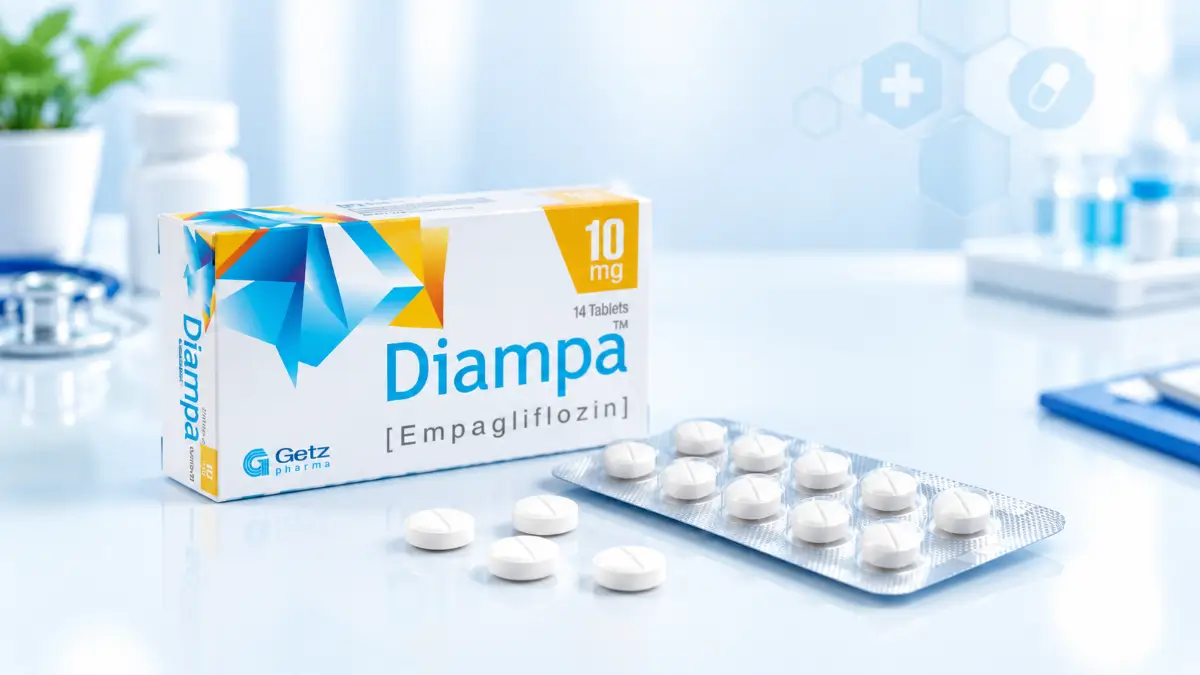
Quick Answer: Diampa tablet contains Empagliflozin and is used to control blood sugar in adults with type 2 diabetes, with combination variants like Diampa M, Diampa LT, and the triple-combination Diampa LXR (Empagliflozin + Linagliptin + Metformin) available for more intensive treatment when a single medicine isn’t enough.
Diampa tablet contains empagliflozin, an SGLT2 inhibitor used with diet and exercise to improve blood sugar control in adults with type 2 diabetes. Getz Pharma lists Diampa in 10 mg and 25 mg strengths. Depending on the patient’s condition, empagliflozin may also be used with other glucose-lowering medicines.
Diampa tablet diabetes mein blood sugar control karne ke liye use hoti hai. Is mein empagliflozin hota hai jo kidneys ko extra glucose urine ke zariye body se nikalne mein madad karta hai. Diampa 10 mg aur 25 mg mein available hai. Is ki dose patient ki diabetes, kidney function aur doosri medicines ko dekh kar doctor decide karta hai.
Important: Diampa prescription medicine hai. Isay doctor ke mashware ke baghair start, stop ya dose increase na karein.
What Is Diampa Tablet?
Diampa is a brand of empagliflozin, an oral medicine belonging to the sodium-glucose cotransporter-2 (SGLT2) inhibitor class.
Empagliflozin works mainly through the kidneys. It reduces the reabsorption of filtered glucose, causing more glucose to leave the body through urine. This helps lower blood glucose levels.
Getz Pharma lists Diampa as an anti-diabetic medicine containing empagliflozin and available as 10 mg and 25 mg tablets.
Quick facts
| Information | Diampa |
|---|---|
| Brand | Diampa |
| Generic name | Empagliflozin |
| Drug class | SGLT2 inhibitor |
| Form | Tablet |
| Strengths | 10 mg, 25 mg |
| Main use | Type 2 diabetes |
| Manufacturer | Getz Pharma |
| Route | Oral |
| Prescription | Yes |
Diampa Tablet Uses
The main Diampa tablet uses are related to blood glucose control in adults with type 2 diabetes.
Getz Pharma states that Diampa is indicated as an adjunct to diet and exercise to improve glycemic control in adults with type 2 diabetes. It can be used alone in selected patients or together with other glucose-lowering medicines when additional control is needed.
1. Type 2 Diabetes
Diampa is primarily used to help lower blood glucose in adults with type 2 diabetes.
It may be prescribed when lifestyle measures alone are not enough, or alongside other diabetes medicines depending on the patient’s treatment plan.
2. Additional Blood Sugar Control
Empagliflozin can be combined with other glucose-lowering medicines, including insulin, when additional glycemic control is required.
3. Cardiovascular and Kidney Benefits of Empagliflozin
Empagliflozin has indications beyond glucose lowering in certain patients. MedlinePlus notes that empagliflozin may reduce the risk of cardiovascular death, hospitalization for heart failure and worsening kidney disease in specific adult populations. The exact indication depends on the patient’s diagnosis and the applicable product labeling.
Important: These benefits should not be interpreted as meaning that every person taking Diampa automatically receives the same cardiovascular or kidney benefit.
How Does Diampa Work?
Diampa contains empagliflozin, which blocks the SGLT2 transporter in the kidneys.
Normally, the kidneys filter glucose and then reabsorb much of it back into the bloodstream. Empagliflozin reduces this reabsorption, so more glucose is passed out in urine.
In simple terms:
Empagliflozin → less glucose reabsorbed by kidneys → more glucose in urine → lower blood glucose.
Because glucose and fluid are being lost through urine, increased urination and thirst can occur in some people.
Diampa 10 mg Uses
Diampa 10 mg contains empagliflozin 10 mg.
It is used for the same main indication as other Diampa strengths: improving glycemic control in adults with type 2 diabetes as part of an appropriate diet, exercise and medication plan.
The 10 mg strength may be used as the starting or maintenance dose depending on the clinical indication and the patient’s kidney function and other factors.
Do not increase from 10 mg to 25 mg on your own.
Diampa 25 mg Uses
Diampa 25 mg contains empagliflozin 25 mg.
It may be prescribed when additional glycemic control is appropriate for a patient who is already receiving empagliflozin, depending on the specific indication and clinical assessment.
The higher strength is not automatically better. Dose selection depends on the patient’s medical condition and the approved indication.
Diampa Tablet Dosage
There is no single Diampa dose that is suitable for every patient.
The appropriate dose can depend on:
- Type and severity of diabetes
- Kidney function
- Other diabetes medicines
- Risk of dehydration
- Cardiovascular or kidney conditions
- The specific indication
- Age and overall health
- Upcoming surgery or acute illness
Empagliflozin is generally taken once daily, with or without food, according to the prescribed regimen.
For Diampa specifically, follow the prescribing information and the dose given by your doctor.
Do not:
- double the dose if you miss a tablet
- increase the dose because blood sugar is high
- stop the medicine suddenly without medical advice
- take somebody else’s diabetes medicine
How to Take Diampa Tablet
Diampa is taken orally.
Try to take it at approximately the same time each day.
It may be taken with or without food.
If you miss a dose, follow your doctor’s or pharmacist’s instructions. MedlinePlus advises taking a missed dose when remembered unless it is almost time for the next dose; a double dose should not be taken to compensate.
Diampa Tablet Side Effects
Like other medicines, Diampa can cause side effects.
Some relatively common effects are related to increased glucose and fluid loss through urine.
Possible side effects include:
- Increased urination
- Increased thirst
- Genital yeast infections
- Urinary tract infections
- Dehydration or volume depletion
- Dizziness, particularly when standing
- Changes in kidney function or laboratory kidney markers
Empagliflozin can also cause more serious problems in some patients.
Serious Diampa Side Effects
Seek urgent medical attention if symptoms suggest:
Diabetic Ketoacidosis
Possible symptoms include:
- nausea
- vomiting
- abdominal pain
- unusual tiredness
- difficulty breathing
Importantly, ketoacidosis can occur even when blood glucose is not extremely high.
Severe Genital Infection
Pain, tenderness, redness or swelling around the genital or perineal area, particularly with fever or feeling very unwell, requires urgent medical assessment.
Severe Allergic Reaction
Emergency treatment is required for symptoms such as:
- swelling of the face, lips, tongue or throat
- difficulty breathing or swallowing
- widespread rash or hives
Diampa and Kidney Function
Kidney function is particularly important when using empagliflozin.
The medicine works through the kidneys, and prescribing decisions can change according to kidney function and the indication for treatment.
Patients with kidney disease should therefore tell their doctor before starting Diampa.
Regular laboratory monitoring may be recommended depending on the patient’s condition.
Diampa and Dehydration
Because empagliflozin increases urinary glucose excretion and can increase urination, fluid loss can occur.
The risk of dehydration may be higher during:
- vomiting
- diarrhea
- fever
- excessive sweating
- reduced fluid intake
- hot weather
- acute illness
Symptoms such as dizziness or lightheadedness can occur with volume depletion.
Patients should follow their healthcare professional’s advice about fluid intake.
Diampa and Weight Loss
Some people may lose weight while taking empagliflozin because glucose and associated fluid are lost through urine.
However, Diampa should not be started simply as a weight-loss medicine.
The appropriate reason for treatment should be established by a healthcare professional.
Diampa and Heart Health
Empagliflozin has important cardiovascular indications in certain patient groups.
Current medication information describes benefits such as reducing hospitalization for heart failure and cardiovascular risk in specific populations.
This does not mean that every person taking Diampa has the same cardiovascular indication. The reason for prescribing should be based on the patient’s diagnosis and the relevant prescribing information.
Diampa Tablet in Pregnancy and Breastfeeding
Pregnancy and breastfeeding require special consideration.
Patients who are pregnant, planning pregnancy or breastfeeding should tell their healthcare professional before taking empagliflozin.
MedlinePlus specifically advises discussing pregnancy and breastfeeding with a healthcare professional and states that breastfeeding should not be undertaken while taking empagliflozin.
Diampa Before Surgery
Patients taking empagliflozin should inform their doctor before surgery.
MedlinePlus states that a doctor may instruct a patient to stop empagliflozin at least 3 days before surgery, because of the risk of ketoacidosis around surgical procedures.
Do not make your own stop/restart schedule; follow the surgical and prescribing team’s instructions.
Diampa Drug Interactions
Tell your doctor or pharmacist about all medicines, supplements and herbal products you use.
The risk of low blood glucose can increase when empagliflozin is combined with certain other glucose-lowering medicines, particularly insulin or sulfonylureas.
Other medicines may also affect hydration, kidney function or blood glucose.
Diampa Variations: Diampa, Diampa-M, Diampa-M XR, Diampa LT & Diampa LXR
This section is important because these names are often searched together, but they are not the same medicine.
| Product | Active ingredients | Main distinction |
|---|---|---|
| Diampa | Empagliflozin | Single-drug SGLT2 inhibitor |
| Diampa-M | Empagliflozin + Metformin HCl | Combination with metformin |
| Diampa-M XR | Empagliflozin + Metformin XR | Extended-release combination |
| Diampa LT | Empagliflozin + Linagliptin | Combination with DPP-4 inhibitor |
| Diampa LXR | Empagliflozin + Linagliptin + Metformin HCl | Three-drug combination |
Getz Pharma confirms these formulations separately. Diampa 10mg-25mg contains empagliflozin alone; Diampa-M contains empagliflozin plus metformin; Diampa-M XR contains extended-release metformin; Diampa LT contains empagliflozin plus linagliptin; and Diampa LXR contains all three active ingredients.
Diampa-M Tablet Uses
Diampa-M combines empagliflozin and metformin and is used in adults with type 2 diabetes when additional glucose control is needed. Getz Pharma lists several strengths for the product.
Diampa-M XR Tablet Uses
Diampa-M XR contains empagliflozin plus extended-release metformin. It is another combination formulation and should not be treated as interchangeable with plain Diampa without medical advice.
Diampa LT Tablet Uses
Diampa LT contains empagliflozin + linagliptin. Getz Pharma lists 10 mg + 5 mg and 25 mg + 5 mg strengths and indicates its use for glycemic control in adults with type 2 diabetes.
Diampa LXR Tablet Uses
Diampa LXR contains empagliflozin + linagliptin + metformin HCl. It is a three-drug combination for type 2 diabetes and should be considered a separate formulation from plain Diampa.
Therefore, searches such as “Diampa M tablet uses” should not be answered as though Diampa-M were simply another strength of Diampa.
Diampa Tablet Price in Pakistan
The price of Diampa varies between pharmacies, pack sizes, discounts and locations.
Recent online pharmacy listings show different prices for the same products. For example, current listings include approximately Rs. 349 for Diampa 10 mg 14 tablets at Servaid and Rs. 559 for Diampa 25 mg 14 tablets; other pharmacies list different prices.
Other current listings show Diampa 10 mg around Rs. 495 and Diampa 25 mg around Rs. 732, demonstrating why an online article should not present one price as universal.
Check the current pharmacy price before purchase, and verify the strength and pack size.
Who Should Be Careful With Diampa?
Tell your doctor if you have:
- Kidney disease
- Liver disease
- Recurrent urinary tract infections
- Genital yeast infections
- Low blood pressure
- Dehydration
- Pancreatic disease
- Foot ulcers or circulation problems
- A history of ketoacidosis
- Heart failure or cardiovascular disease
- Problems with urination
Also tell your healthcare professional if you are eating or drinking less because of illness, have vomiting or diarrhea, follow a ketogenic diet, or are scheduled for surgery.
Is Diampa the Same as Dapagliflozin?
No.
This is an important distinction for medicine searches.
- Diampa = Empagliflozin
- Dapagliflozin is a different SGLT2 inhibitor
Getz Pharma’s own product listing identifies Diampa’s generic name as empagliflozin.
Therefore, information about dapagliflozin should not automatically be applied to Diampa.
Diampa Tablet Uses in Urdu/Hindi
Diampa tablet kis liye use hoti hai?
Diampa tablet mein empagliflozin hota hai jo type 2 diabetes mein blood sugar control karne ke liye use hota hai. Ye SGLT2 inhibitor hai aur kidneys ke zariye extra glucose ko urine mein nikalne mein madad karta hai. Diampa 10 mg aur 25 mg strengths mein available hai.
Diampa tablet ke uses mein type 2 diabetes mein blood glucose ko control karna shamil hai. Kuch patients mein empagliflozin ko doosri diabetes medicines ke sath bhi use kiya jata hai. Diampa-M, Diampa-M XR aur Diampa LT alag combination medicines hain, is liye inki composition aur uses plain Diampa se different ho sakte hain.
Frequently Asked Questions
What are Diampa tablet uses?
Diampa contains empagliflozin and is used with diet and exercise to improve blood glucose control in adults with type 2 diabetes.
What is Diampa 10 mg used for?
Diampa 10 mg contains empagliflozin 10 mg and is used for appropriate adults with type 2 diabetes according to the prescribed treatment plan.
What is Diampa 25 mg used for?
Diampa 25 mg contains empagliflozin 25 mg. It may be prescribed when the higher strength is clinically appropriate.
What is Diampa M tablet?
Diampa-M is a combination of empagliflozin + metformin, so it is different from plain Diampa.
What is Diampa-M XR?
Diampa-M XR contains empagliflozin + extended-release metformin.
What is Diampa LT?
Diampa LT contains empagliflozin + linagliptin.
What are the common Diampa tablet side effects?
Possible effects include increased urination and thirst, genital infections, urinary tract infections and dehydration-related symptoms.
Can Diampa cause low blood sugar?
Empagliflozin can contribute to hypoglycemia particularly when used with medicines such as insulin or sulfonylureas.
Is Diampa used for weight loss?
Weight loss can occur with empagliflozin, but Diampa should not be self-started simply as a weight-loss medicine.
Is Diampa the same as dapagliflozin?
No. Diampa contains empagliflozin, while dapagliflozin is a different medicine in the same broad SGLT2 inhibitor class.
What is the Diampa tablet price in Pakistan?
The price varies by strength, pack size, pharmacy and current discounts. Current online listings show different prices, so the exact price should be checked before purchase.
Final Takeaway
Diampa tablet contains empagliflozin, an SGLT2 inhibitor used to improve blood sugar control in adults with type 2 diabetes. Getz Pharma lists plain Diampa in 10 mg and 25 mg strengths.
The medicine works by reducing glucose reabsorption in the kidneys, increasing glucose excretion through urine. Because of this mechanism, increased urination, thirst, dehydration and genital or urinary infections can occur. Rare but serious problems such as ketoacidosis require urgent medical attention.
Diampa, Diampa-M, Diampa-M XR, Diampa LT and Diampa LXR are not interchangeable products. Their active ingredients are different, so the exact product name and strength should always be checked before use.
Medical Disclaimer: This article is for general educational purposes and does not replace advice from a doctor or pharmacist. Diampa is a prescription medicine and should be used according to the patient’s individual medical assessment and prescribing instructions.
Looking for information about a specific medicine? Explore our [Medicine Information] section for details about medicines, including their uses, side effects, dosage, and precautions.
Reviewed by:
Zeeshan Ahmad
Pharmacy Technician
Experience since 2012