
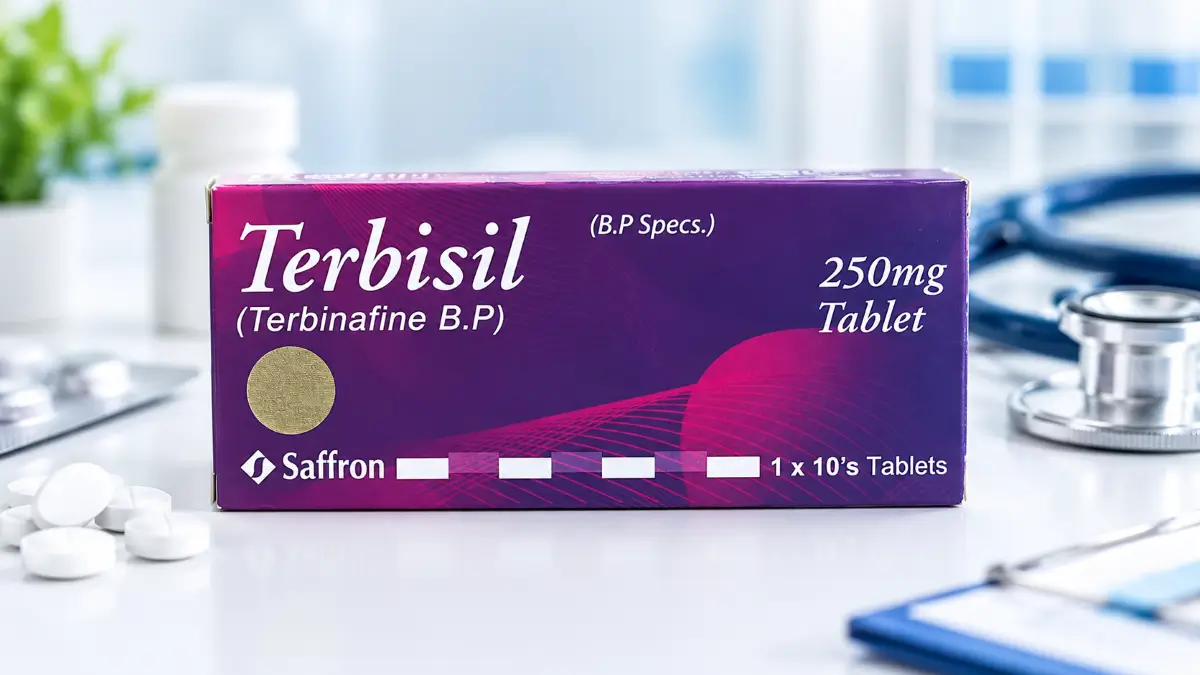
Quick Answer: Terbisil tablet is an oral antifungal medicine used when fungal infections need treatment from within the body, rather than with creams or sprays alone. It contains terbinafine hydrochloride, often described on packs as terbinafine 250 mg or terbinafine hcl, and is commonly prescribed for fungal nail infections and certain fungal infections of the skin. This guide explains the main terbinafine tablet uses, how treatment is usually taken, what benefits to expect, and which terbinafine side effects need medical attention.
This article is for general education only. Always follow the instructions from your own doctor, pharmacist, or the patient leaflet supplied with your medicine.
What is Terbisil tablet and what does it do?
Terbisil is a brand name used for tablets containing terbinafine, an antifungal medicine. Terbinafine belongs to a group called allylamines; it works by interfering with fungal sterol production, which damages the fungal cell membrane and can lead to fungal cell death. A standard terbinafine 250 mg tablet contains terbinafine hydrochloride equivalent to 250 mg terbinafine, although inactive ingredients and brand names can vary by country and manufacturer. (medicines.org.uk)
The key benefit of oral terbinafine tablets is that the medicine reaches areas that topical treatments may struggle to penetrate, especially thickened nails and deeper skin involvement. When taken by mouth, terbinafine can build up in skin and nails at antifungal levels, which is why it is often chosen for persistent nail fungus. (medicines.org.uk)
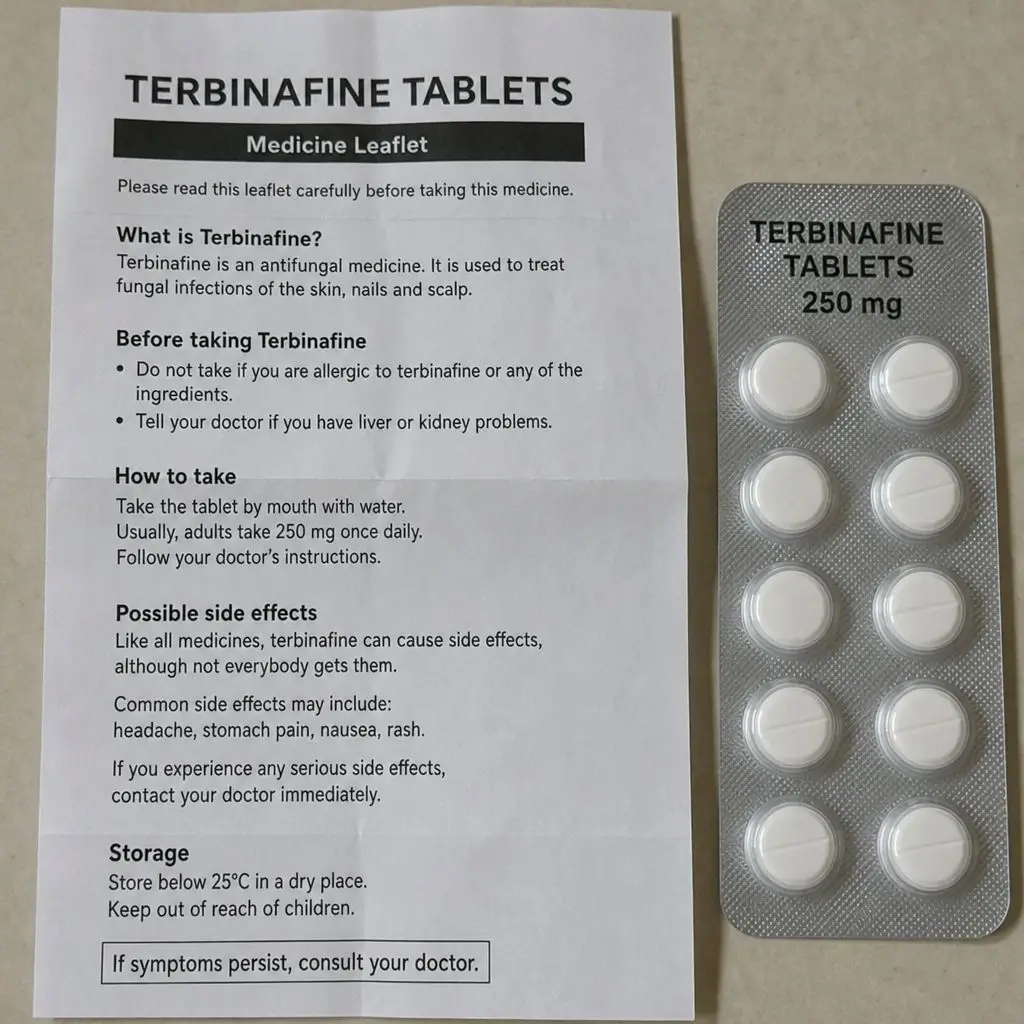
The main Terbisil tablet uses
Terbinafine tablets are generally used for fungal infections caused by susceptible organisms, particularly dermatophytes. Your clinician may recommend tablets when the infection is widespread, recurrent, involves the nails, or is unlikely to respond well to a cream, gel, spray, or solution. (nhs.uk)
Common Terbisil uses include:
| Infection type | Where it appears | Practical note |
| Fungal nail infection | Fingernails or toenails | Often needs several weeks to months because nails grow slowly. |
| Athlete’s foot | Feet, especially between toes or soles | Tablets may be used for more severe or persistent cases. |
| Jock itch | Groin area | Usually treated for a shorter period than nail infections. |
| Ringworm | Body skin | Treatment length depends on the site and extent. |
| Candida skin infection | Skin folds or other affected areas | Oral treatment is considered when appropriate for severity or location. |
One important distinction: oral terbinafine is not considered effective for pityriasis versicolor, even though topical antifungal products may be used for that condition. This is one reason a proper diagnosis matters before starting treatment. (medicines.org.uk)
How should Terbisil 250 mg be taken?
For adults, the usual approach is one 250 mg tablet once daily, swallowed with water, preferably at the same time each day. Terbinafine tablets can usually be taken with or without food, so choose the routine you are most likely to remember. Treatment duration depends on the infection: athlete’s foot may require about 2 to 6 weeks, jock itch about 2 to 4 weeks, ringworm around 4 weeks, and fungal nail infections commonly 6 weeks to 3 months or sometimes longer. (nhs.uk)
For children, dosing is weight-based and should be directed by a clinician. Product information notes that there is no data for children under 2 years, usually under 12 kg; children over 40 kg may receive the adult 250 mg once-daily dose, while children in lower weight bands may need a different strength or formulation rather than splitting a tablet that is not designed to divide evenly. (medicines.org.uk)
Missed doses and course completion
If you miss a dose, take it when you remember unless it is nearly time for the next one. If it is close to the next dose, skip the missed tablet and carry on as normal; do not double up. Finishing the prescribed course matters, because stopping early can allow the fungal infection to return even if symptoms have started to improve. (nhs.uk)
A simple adherence plan can help:
- Link the tablet to a daily habit, such as breakfast or brushing your teeth.
- Set a phone reminder, especially during long nail-fungus courses.
- Keep the medicine visible but safe, out of reach of children.
- Mark your expected finish date, then check with your prescriber before stopping early.
- Book any recommended blood tests, rather than waiting until symptoms appear.
Benefits and realistic expectations
The biggest benefit of terbinafine tablets is their ability to treat fungal infections that are difficult to clear from the outside. Nail fungus is the classic example: the infection sits in or under the nail plate, so topical products may not reach enough of the fungus. Oral treatment can be more suitable when the nail is thick, discoloured, lifting, painful, or when several nails are affected.
Results are not always visible straight away. With skin infections, itching, redness, and scaling may improve before the course ends. With nail infections, the infected part of the nail must grow out, so a nail can still look abnormal for weeks or months after the fungus has been controlled. Product information also notes that complete resolution of symptoms may occur several weeks after mycological cure, meaning the fungus may be cleared before the nail or skin looks fully normal. (medicines.org.uk)
That waiting period can be frustrating, but it is normal. Good foot hygiene, keeping skin dry, changing socks regularly, not sharing nail tools, and treating footwear or reinfection sources can support recovery. These steps do not replace terbinafine tablets, but they reduce the chance of repeatedly exposing treated skin or nails to fungus.
What Terbisil side effects need urgent attention?
Most people tolerate terbinafine tablets, but side effects can occur and some need prompt care. Common effects include reduced appetite, stomach upset, headache, rash, and muscle or joint aches. NHS guidance also notes that serious side effects are uncommon, but oral terbinafine can rarely affect the liver, especially during longer courses. (nhs.uk)
Stop taking the tablets and seek medical advice urgently if you develop warning signs such as yellowing of the skin or eyes, dark urine, pale stools, ongoing nausea, vomiting, unusual tiredness, pain in the upper right abdomen, severe rash, blistering or peeling skin, swelling of the face or throat, breathing difficulty, fever, sore throat, unusual bruising, or signs of infection. These can point to liver problems, severe allergic reactions, serious skin reactions, or blood-cell problems. (medicines.org.uk)
Other reported effects include taste or smell changes, mood changes such as depression or anxiety, dizziness, photosensitivity, and changes linked to lupus or psoriasis in susceptible people. Not every symptom will be caused by the medicine, but new or worrying symptoms during treatment should be discussed with a healthcare professional rather than ignored. (medicines.org.uk)
Precautions, interactions, and people who should avoid it
Terbinafine tablets are not suitable for everyone. They are contraindicated in people with known hypersensitivity to terbinafine or tablet ingredients, chronic or active liver disease, and severe renal impairment according to product information. Liver function testing is recommended before prescribing, and clinicians may consider further monitoring during treatment, particularly when there are risk factors or symptoms. (medicines.org.uk)
Tell your doctor or pharmacist about all medicines and supplements you take before starting Terbisil. Terbinafine can interact with medicines affected by CYP2D6 metabolism, including some antidepressants, beta blockers, antiarrhythmics, and MAO-B inhibitors. Other medicines may raise or lower terbinafine levels, such as fluconazole, ketoconazole, amiodarone, cimetidine, and rifampicin; spontaneous reports have also described changes in prothrombin time in people taking oral terbinafine with warfarin, although causality has not been established. (medicines.org.uk)
Pregnancy and breastfeeding need individual advice. Product information states that terbinafine tablets should not be used during pregnancy unless the clinical need justifies the potential risk, and that breastfeeding mothers should not receive terbinafine because it is excreted in breast milk. (medicines.org.uk)
Terbisil, Lamisil, and generic terbinafine
People often compare Terbisil with Lamisil or generic terbinafine tablets. The practical point is that these products may contain the same active antifungal ingredient, but brand names, availability, tablet appearance, inactive ingredients, and local approvals can differ. NHS information lists Lamisil as a brand name for terbinafine, while official product leaflets identify tablets by the active substance and strength. (nhs.uk)
If your prescription changes from one brand to another, check that the strength and directions are the same. If you have allergies, swallowing difficulties, dietary restrictions, or previous reactions to medicines, ask the pharmacist to review the excipients and formulation.
Key takeaways before starting treatment
Before taking Terbisil or any terbinafine tablets, make sure you understand:
- The diagnosis — not every discoloured nail is fungal, and oral terbinafine does not treat every fungal condition.
- The dose — adults are commonly prescribed terbinafine 250 mg once daily, but children need weight-based advice.
- The timeline — nail infections take patience because healthy nail must grow through.
- The safety checks — liver history, kidney history, allergies, pregnancy, breastfeeding, and interacting medicines all matter.
- The warning signs — jaundice, dark urine, pale stools, severe rash, swelling, breathing difficulty, fever, sore throat, bruising, or severe tiredness need urgent medical advice.
Frequently Asked Questions About Terbisil Tablets
1. What is Terbisil used to treat?
Terbisil tablets contain terbinafine, an antifungal medicine used to treat certain fungal infections. Oral terbinafine is commonly prescribed for fungal nail infections and may also be used for some other fungal infections when a doctor considers tablets appropriate.
2. What are the side effects of Terbisil (terbinafine) 250 mg?
Common side effects of terbinafine tablets may include headache, nausea, diarrhea, indigestion, stomach discomfort, rash, reduced appetite, and muscle or joint pain. Changes or loss of taste can also occur. Rarely, terbinafine can cause serious liver problems or severe allergic or skin reactions. Seek medical advice promptly if you develop yellowing of the skin or eyes, dark urine, pale stools, severe rash, or unusual tiredness.
3. Is terbinafine the strongest antifungal?
There is no single antifungal medicine that is considered the “strongest” for every fungal infection. The appropriate antifungal depends on the type and location of the infection, its severity, and the patient’s medical circumstances. Terbinafine is an effective antifungal for certain infections, but another antifungal may be more suitable for a particular condition.
4. When is the best time of day to take Terbisil tablets?
Terbisil (terbinafine) tablets can generally be taken with or without food. There is no specific time of day that is required; the important thing is to take it at approximately the same time each day and follow the dose prescribed by your doctor.
5. How long does Terbisil take to work?
The time needed depends on the type of fungal infection. Terbinafine tablets can take several weeks to show their full effect, and fungal nail infections may take several months to visibly clear because healthy nails need time to grow.
6. Can Terbisil tablets be taken with food?
Yes. Terbinafine tablets can generally be taken with or without food. Swallow the tablet whole with water and follow your doctor’s prescribed dosing schedule.
7. Can I stop taking Terbisil when my symptoms improve?
Do not stop Terbisil early unless your doctor tells you to. Completing the prescribed course is important because stopping treatment too soon may allow the fungal infection to return.
8. Who should avoid Terbisil tablets?
Tell your doctor before taking terbinafine if you have or have had liver or kidney problems, an allergy to terbinafine, or if you are pregnant, planning pregnancy, or breastfeeding. Terbinafine can also interact with several medicines, so provide your doctor or pharmacist with a list of all medicines and supplements you take.
9. Do Terbisil tablets require liver tests?
Your doctor may recommend blood tests to monitor liver function, particularly when terbinafine tablets are being used for longer periods. Although serious liver problems are uncommon, symptoms such as yellow skin or eyes, dark urine, pale stools, unusual tiredness, or loss of appetite should be reported promptly.
10. What should I do if I miss a Terbisil dose?
Take the missed dose when you remember unless it is nearly time for your next dose. If the next dose is due soon, skip the missed dose and continue with your normal schedule. Do not take two doses together to make up for a missed dose.
Important: Terbisil/terbinafine tablets should be used according to a doctor’s prescription. The appropriate dose and treatment duration depend on the type of fungal infection and the patient’s circumstances.
Terbisil can be a useful option for stubborn fungal infections, especially when topical treatment is not enough. Its benefits are strongest when the infection is correctly diagnosed, the full course is completed, and side effects are taken seriously. If you are unsure whether terbinafine hydrochloride is right for you, speak with a healthcare professional before starting or stopping treatment.