
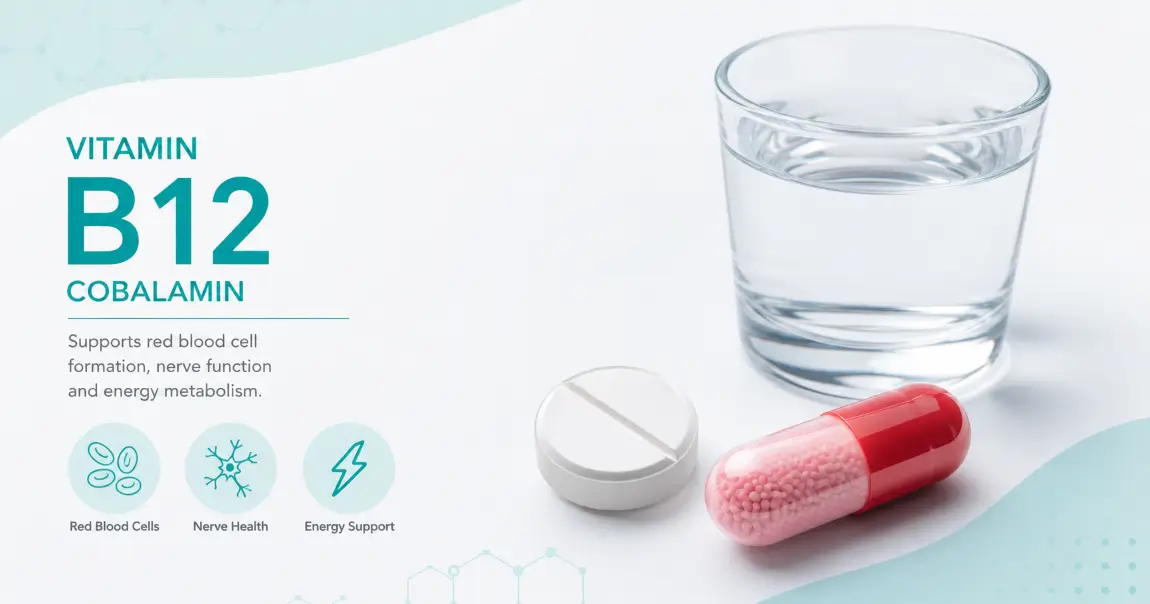
Quick answer: Cobalamin tablets use to prevent and treat vitamin B12 deficiency.Cobalamin is another name for vitamin B12. Doctors also use them for B12-related anemia and for nerve symptoms such as numbness and tingling when low B12 is the cause. The right form and dose depend on why your B12 is low.
Last reviewed: September 2026
Key Takeaways
- Cobalamin is vitamin B12. Tablets come as cyanocobalamin, methylcobalamin (also called mecobalamin) and other forms.
- Cobalamin tablet use to preventing and treating B12 deficiency and B12-related anemia.
- Adults need only 2.4 mcg of B12 per day, but treatment doses prescribed for deficiency are higher.
- Metformin and acid-reducing medicines can lower B12 absorption.
- Get a B12 blood test before you self-treat tiredness or numbness.
What Is a Cobalamin Tablet?
Cobalamin is the scientific name for vitamin B12. It is a water-soluble vitamin that contains the mineral cobalt. Your body cannot make it, so you get it from animal foods, fortified foods and supplements.
Your body uses B12 to make red blood cells and DNA. It also keeps your nerve cells healthy.
Cobalamin tablets come as regular swallow tablets, chewable tablets, dissolving tablets and sublingual tablets (placed under the tongue). Many are single-ingredient B12 products. Others combine B12 with vitamins like B1 and B6.
Cobalamin Tablets Uses
1. Vitamin B12 deficiency
This is the most common use. Doctors prescribe cobalamin tablets to raise low B12 levels and prevent complications. Untreated deficiency can damage nerves, so early treatment matters.
2. B12-related anemia
Low B12 can cause megaloblastic anemia, where your body makes fewer, larger red blood cells. Pernicious anemia is a related condition. In it, your stomach cannot make enough intrinsic factor, a protein needed to absorb B12.
Doctors often start with injections when the deficiency is severe or absorption is the problem. Some patients continue with high-dose tablets afterward. Your doctor decides which route fits your case.
3. Nerve symptoms linked to low B12
Methylcobalamin tablets are widely prescribed in Pakistan for numbness, tingling and burning in the hands and feet. The strongest case for B12 is when deficiency causes those symptoms. B12 does not replace medicines that treat nerve pain itself. See our guide on [pregabalin (Gabica)] for that.
4. Supplement for higher-risk groups
Some people are more likely to run low on B12:
- Vegetarians and vegans, because plant foods contain no B12 unless fortified
- Adults over 50, because stomach acid and absorption decline with age
- People taking metformin or long-term acid-reducing medicines
- People who had stomach or intestinal surgery
- Pregnant and breastfeeding women, who have higher needs
What cobalamin tablets do not do
There is no good evidence that extra B12 boosts energy, helps weight loss or grows hair when your levels are already normal. Take it for a confirmed need, not as a general energy pill.
Types of Cobalamin in Tablets
| Form | Also called | Notes |
|---|---|---|
| Cyanocobalamin | Synthetic B12 | Most common in supplements. Your body converts it to active forms. |
| Methylcobalamin | Mecobalamin, Methyl B12 | Active form. Sold in Pakistan under brands such as Methycobal and Mecobal. |
| Hydroxocobalamin | Hydroxo B12 | Mostly used as injections. |
| Adenosylcobalamin | Dibencozide | The other active form. Found in some supplements. |
Is methylcobalamin better than cyanocobalamin? The NIH says current evidence does not show differences in absorption or bioavailability between forms. Your absorption is limited mainly by intrinsic factor, not by the form. Choose the form your doctor prescribes and use it consistently.
Cobalamin Tablet Dosage: What You Should Know
Daily requirement for healthy people (NIH):
| Group | B12 per day |
|---|---|
| Adults (19+ years) | 2.4 mcg |
| Pregnancy | 2.6 mcg |
| Breastfeeding | 2.8 mcg |
Treatment for deficiency uses much higher amounts than these. Tablets in Pakistan commonly come in 500 mcg strengths, and some supplements contain 1,000 mcg or more. Only about 10 mcg of a 500 mcg oral dose is absorbed in healthy people, which is why supplement strengths look large.
Your doctor sets your dose and duration based on your B12 level, symptoms and the cause of the deficiency. Do not copy someone else’s dose.
How to Take Cobalamin Tablets
- Take the tablet at the same time each day.
- Swallow regular tablets whole with water. Do not crush or chew them unless the label says the tablet is chewable.
- Let sublingual tablets dissolve under your tongue.
- If you miss a dose, take it when you remember the same day. Do not double up.
- Recheck your B12 level as your doctor advises.
Symptoms of Low Vitamin B12
- Constant tiredness and weakness
- Pale or slightly yellow skin
- Numbness or tingling in hands and feet
- Sore, red tongue
- Poor balance
- Memory or concentration problems
These symptoms overlap with many other conditions. A blood test is the only way to confirm low B12.
Side Effects of Cobalamin Tablets
Cobalamin tablets are usually well tolerated because B12 is water-soluble. Your body removes the excess in urine.
Possible mild side effects:
- Nausea
- Diarrhea
- Headache
- Itching or mild rash
Get urgent medical help if you have swelling of the face, lips or throat, or trouble breathing. These are signs of a severe allergic reaction.
Precautions and Interactions
- Metformin: Long-term use can lower B12 levels. Ask your doctor about testing.
- Acid-reducing medicines: Proton pump inhibitors and H2 blockers, such as esomeprazole (Nexum), reduce B12 absorption over time.
- Allergy: Do not use cobalamin if you are allergic to B12 or cobalt.
- Pregnancy and breastfeeding: Talk to your doctor about the right amount.
- Kidney or liver disease: Ask your doctor before starting.
- Anemia: Do not treat anemia with folic acid alone. Folic acid can improve the blood count while B12-related nerve damage keeps getting worse. Check both B12 and folate.
- Other supplements: Tell your doctor about all vitamins you take, including vitamin B6 and CaC 1000 Plus.
Food Sources of Vitamin B12
You can raise your B12 intake through food:
- Clams and beef liver (among the richest sources)
- Fish, meat and poultry
- Eggs
- Milk, yogurt and cheese
- Fortified cereals and fortified plant milk
Frequently Asked Questions
Is cobalamin the same as vitamin B12?
Yes. Cobalamin is the chemical name for vitamin B12.
What is a cobalamin tablet used for?
It is used to prevent and treat vitamin B12 deficiency and B12-related anemia. Doctors also prescribe it for nerve symptoms caused by low B12.
Can I take a cobalamin tablet every day?
Many people take B12 daily, but the amount and duration depend on your B12 level and the reason for the deficiency. Follow your doctor’s plan.
What is the difference between cobalamin and methylcobalamin?
Methylcobalamin is one form of cobalamin. Cyanocobalamin is another. The body can convert supplement forms into the active ones.
Does cobalamin cause weight gain?
There is no evidence that B12 causes weight gain. It is also not a weight-loss supplement.
Can I buy cobalamin tablets without a prescription?
Many B12 supplements are sold without a prescription. But confirm deficiency with a blood test first, especially if you have numbness, anemia or take long-term medicines.
Who should avoid cobalamin tablets?
Anyone allergic to B12 or cobalt should avoid them. Ask your doctor first if you are pregnant, have kidney or liver disease, or take other medicines.
Conclusion
Cobalamin tablets are a safe, well-studied way to correct vitamin B12 deficiency and support healthy blood and nerves. The right form and dose depend on your test results and the cause of the deficiency. If you have tiredness, numbness or tingling, get your B12 level tested before you start a supplement.
Medical disclaimer: This article gives general information only. It does not replace advice from a doctor or pharmacist. Do not start, stop or change any medicine without professional guidance.
Sources: NIH Office of Dietary Supplements, Mayo Clinic, NHS.