
Quick answer: Vitamin A deficiency most commonly shows up as poor night vision, dry eyes, and a higher risk of infections, and it is usually correctable through vitamin-A-rich foods or a doctor-recommended supplement.
وٹامن اے کی کمی عام طور پر رات کو کم دکھائی دینا، آنکھوں کا خشک ہونا اور بار بار انفیکشن ہونے کی صورت میں ظاہر ہوتی ہے، جسے متوازن خوراک یا ڈاکٹر کے مشورے سے سپلیمنٹ لے کر ٹھیک کیا جا سکتا ہے
Vitamin A is one of the most important fat-soluble vitamins in the body. It plays a direct role in eyesight, immune defense, skin health, reproduction, and normal growth in children. Despite being widely available in everyday foods, vitamin A deficiency is still one of the leading causes of preventable blindness worldwide, and mild deficiency is more common than most people realize — even in places where food is not scarce, just poorly balanced. This guide breaks down the early warning signs, who is most at risk, how much vitamin A your body actually needs, the best food sources, safe supplement dosages, and what happens if you take too much.
What Is Vitamin A?
Vitamin A is not a single compound — it exists in two main forms in the human diet.
- Preformed vitamin A (retinol and retinyl esters) comes from animal sources such as liver, fish, eggs, and dairy. Your body can use this form directly.
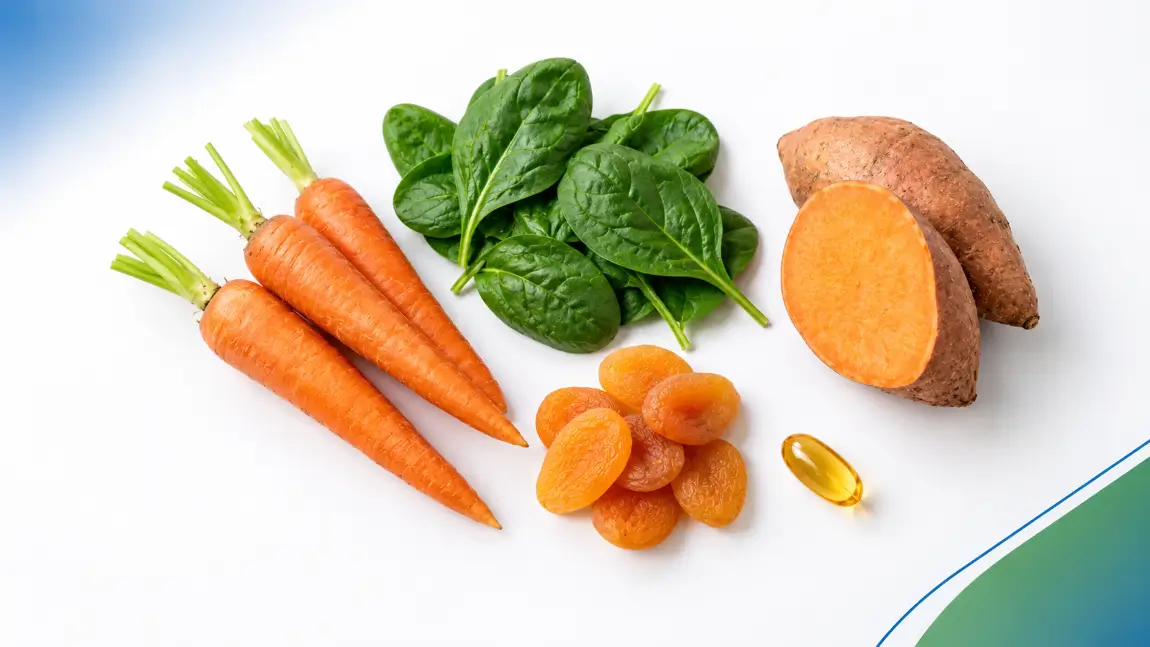
- Provitamin A carotenoids, the most well-known being beta-carotene, come from plant sources like carrots, spinach, and sweet potatoes. Your body converts these into active vitamin A as needed.
This distinction matters because the two forms behave very differently when taken in excess — preformed vitamin A can build up to harmful levels, while excess beta-carotene generally cannot.
Why Vitamin A Matters: Key Benefits
- Vision – Vitamin A is a core component of rhodopsin, the light-sensing pigment in the retina. It’s essential for seeing in low light and preventing night blindness.
- Immune function – It supports the mucous membranes lining the respiratory and digestive tracts, which act as a first line of defense against infection.
- Skin health – Vitamin A regulates skin cell turnover, which is why retinoids (a vitamin A derivative) are widely used in dermatology.
- Growth and reproduction – Adequate vitamin A is necessary for normal fetal development, bone growth, and reproductive health in both men and women.
- Organ function – It also supports the heart, lungs, kidneys, and other organs at a cellular level.
How Much Vitamin A Do You Need Per Day?
Requirements are measured in micrograms of Retinol Activity Equivalents (mcg RAE) and vary by age, sex, and life stage.
| Life Stage | Recommended Amount (mcg RAE/day) |
|---|---|
| Infants 0–6 months | 400 |
| Infants 7–12 months | 500 |
| Children 1–3 years | 300 |
| Children 4–8 years | 400 |
| Children 9–13 years | 600 |
| Teen boys 14–18 years | 900 |
| Teen girls 14–18 years | 700 |
| Adult men | 900 |
| Adult women | 700 |
| Pregnant women | 770 |
| Breastfeeding women | 1,300 |
For quick reference, the adult RDA of roughly 700–900 mcg RAE is approximately equal to 2,300–3,000 IU of retinol, depending on the source and form.
Vitamin A Rich Foods
You can meet your daily requirement through a normal, varied diet. The richest sources include:
- Organ meats – beef liver is one of the most concentrated natural sources (limit intake, as it’s also high in cholesterol)
- Oily fish – salmon, herring, and fish liver oils
- Eggs and dairy – milk, cheese, and butter
- Orange and yellow vegetables – carrots, sweet potatoes, pumpkin, and winter squash
- Dark leafy greens – spinach and kale
- Fruits – mango, cantaloupe, and apricots
- Fortified foods – many breakfast cereals and packaged milk products are fortified with vitamin A
A simple rule of thumb: if a fruit or vegetable is deep orange, yellow, or dark green, it’s likely a strong source of beta-carotene.
Signs and Symptoms of Vitamin A Deficiency
Deficiency develops gradually, and the eyes are usually affected first:
- Night blindness (nyctalopia) – difficulty seeing in dim light or at dusk; this is typically the earliest and most recognizable symptom.
- Xerophthalmia – progressive dryness of the eyes, which can advance to corneal damage if untreated.
- Bitot’s spots – foamy, greyish patches on the white of the eye, a classic clinical sign of deficiency.
- Frequent infections – particularly respiratory infections and diarrheal illness, since vitamin A supports the immune barrier.
- Dry, rough, or scaly skin – due to abnormal skin cell turnover.
- Poor growth and delayed development in children.
- Anemia-like fatigue – vitamin A also plays a supporting role in iron metabolism.
Left untreated for long periods, severe deficiency can progress to permanent vision loss and significantly raises the risk of death in young children in deficiency-prone regions.
Who Is Most at Risk?
Vitamin A deficiency is uncommon in people eating a balanced diet, but certain groups are more vulnerable:
- Premature infants (low reserves at birth)
- Young children, pregnant women, and breastfeeding women in areas with limited food diversity
- People with conditions that impair fat absorption, such as cystic fibrosis, Crohn’s disease, ulcerative colitis, or celiac disease — since vitamin A is fat-soluble and needs dietary fat to be absorbed properly
- People with chronic liver disease, since the liver stores most of the body’s vitamin A reserves
- Anyone on a severely restricted or unbalanced diet
Vitamin A Deficiency Treatment and Dosage
Mild deficiency is usually corrected by simply increasing dietary intake of vitamin-A-rich foods. For confirmed or more severe deficiency, doctors follow standard supplementation protocols, commonly:
- Severe deficiency (age above 12 months): a high dose on day 1 and day 2, followed by a repeat dose around 4 weeks later, under medical supervision.
- Measles-related deficiency in children: a single high-dose supplement, since vitamin A reduces complications and severity in children with measles in deficiency-prone areas.
- Maintenance/prevention: meeting the standard daily RDA (700–900 mcg RAE for adults) through diet, with a low-dose multivitamin if needed.
These high-dose regimens should only be given by or under the guidance of a qualified doctor — vitamin A is not a “more is better” nutrient, and self-dosing at treatment-level amounts is not safe.
Common Vitamin A Supplements and Brands
Vitamin A supplements are typically formulated as retinyl acetate or retinyl palmitate (preformed vitamin A), beta-carotene (provitamin A), or a combination of both. Most standard multivitamin/mineral products also contain a baseline amount of vitamin A.
In Pakistan, vitamin A is available over the counter in several forms without a prescription, including plain vitamin A tablets/capsules, combination fish liver oil capsules (often paired with vitamin D3), and pediatric syrups from various local manufacturers. Pack sizes, strengths, and prices vary by brand and pharmacy, so it’s best to confirm the current price and correct strength with your pharmacist before purchasing, rather than relying on a fixed figure.
Vitamin A for Skin
Because vitamin A regulates skin cell turnover, its derivatives — known as retinoids — are among the most studied ingredients in dermatology. Prescription-strength retinoids like tretinoin, along with over-the-counter retinol serums, are commonly used for acne, photoaging (fine lines and sun damage), and certain skin conditions like psoriasis. Topical use is different from oral supplementation, and the two should not be confused when it comes to dosage or safety guidance.
Can Vitamin A Be Harmful? Overdose and Toxicity
Yes — unlike most water-soluble vitamins, excess preformed vitamin A is stored in the liver and can accumulate to toxic levels.
Acute toxicity (usually from a single very large dose) can cause:
- Severe headache and blurred vision
- Nausea and dizziness
- Muscle aches and poor coordination
- In severe cases, raised pressure inside the skull, coma, or death
Chronic toxicity (regularly exceeding roughly 25,000 IU/day over time) can cause:
- Liver damage
- Hair loss
- Dry, peeling skin
- Bone pain and elevated blood calcium
Pregnancy risk: high-dose preformed vitamin A (generally above 10,000 IU/day) during pregnancy has been linked to birth defects affecting the eyes, skull, lungs, and heart. Pregnant women should avoid high-dose vitamin A supplements unless specifically prescribed.
The daily upper limit for preformed vitamin A in adults is about 3,000 mcg RAE (roughly 10,000 IU) from all combined sources — food, fortified products, and supplements.
| Age Group | Upper Limit (mcg/day, preformed vitamin A) |
|---|---|
| 1–3 years | 600 |
| 4–8 years | 900 |
| 9–13 years | 1,700 |
| 14–18 years | 2,800 |
| Adults (19+) | 3,000 |
Note on beta-carotene: High intake from food or supplements does not cause the same toxicity — it can turn the skin yellow-orange (harmless and reversible), but current and former smokers should avoid high-dose beta-carotene supplements, as studies link them to an increased lung cancer risk in this specific group.
Vitamin A Drug Interactions
- Orlistat (weight-loss medication) reduces the absorption of vitamin A, which can lead to low levels over time in some people.
- Acitretin (used for psoriasis) and bexarotene (used for certain lymphomas) are both vitamin A derivatives — combining them with a vitamin A supplement can push blood levels dangerously high.
Always tell your doctor or pharmacist about any supplements you’re taking alongside prescription medication.
Related Vitamins
Vitamin A works alongside several other essential nutrients as part of overall health — most notably Vitamin D3, which supports bone and immune health (see our Vitamin D3 Injection guide for uses and dosage), as well as Vitamin C, Vitamin E, and Vitamin B12. We’ll be covering each of these in dedicated guides soon.
Frequently Asked Questions
1. What is the fastest way to correct vitamin A deficiency?
Increasing intake of vitamin-A-rich foods works for mild cases. Confirmed or severe deficiency is treated faster with a doctor-prescribed high-dose supplement course.
2. Which food has the most vitamin A?
Beef liver and fish liver oil are the most concentrated sources of preformed vitamin A; among plant foods, sweet potatoes and carrots are among the richest in beta-carotene.
3. Can too much vitamin A be dangerous?
Yes. Excess preformed vitamin A (from supplements, not food) can cause symptoms ranging from headaches and nausea to liver damage, and it’s especially risky during pregnancy.
4. What’s the difference between vitamin A and beta-carotene?
Vitamin A (retinol) is the active, ready-to-use form found in animal foods. Beta-carotene is a plant-based precursor that your body converts into vitamin A as needed, which is why it doesn’t carry the same overdose risk.
5. Is vitamin A good for skin and hair?
Yes — it supports normal skin cell turnover, which is why retinoids are used for acne and anti-aging. Both deficiency and excess vitamin A can actually cause hair loss, so balance matters.
6. Vitamin A ki kami ki alamat kya hain?
The most common symptom of Vitamin A deficiency is blurred or poor vision at night, known as night blindness. Other signs may include dry eyes, frequent infections, dry and rough skin, and stunted growth in children. Consult a doctor if you experience these symptoms.
Roman Urdu Khulasa
Vitamin A aankhon, immune system, aur skin ke liye bohat zaroori hai. Iski kami ki sab se pehli alamat aam tor par raat ko kam dikhna (night blindness) hoti hai, phir aankhon ka khushk hona aur baar baar infections hona shuru ho sakte hain. Ye kami zyada tar carrot, palak, sweet potato, anda, dairy products, aur liver jese foods na khane se hoti hai. Halki kami sirf khuraak theek karne se theek ho jati hai, lekin severe cases mein doctor high-dose supplement tajweez karta hai — khud se zyada dose lena bilkul na karein, kyun ke zyada vitamin A bhi liver aur pregnancy ke liye nuksandeh ho sakta hai. Koi bhi supplement shuru karne se pehle apne doctor ya pharmacist se mashwara zaroor karein.
Medical Disclaimer
This article is for general educational purposes only and is not a substitute for professional medical advice, diagnosis, or treatment. Always consult a qualified doctor or pharmacist before starting, stopping, or changing any supplement or medication.